
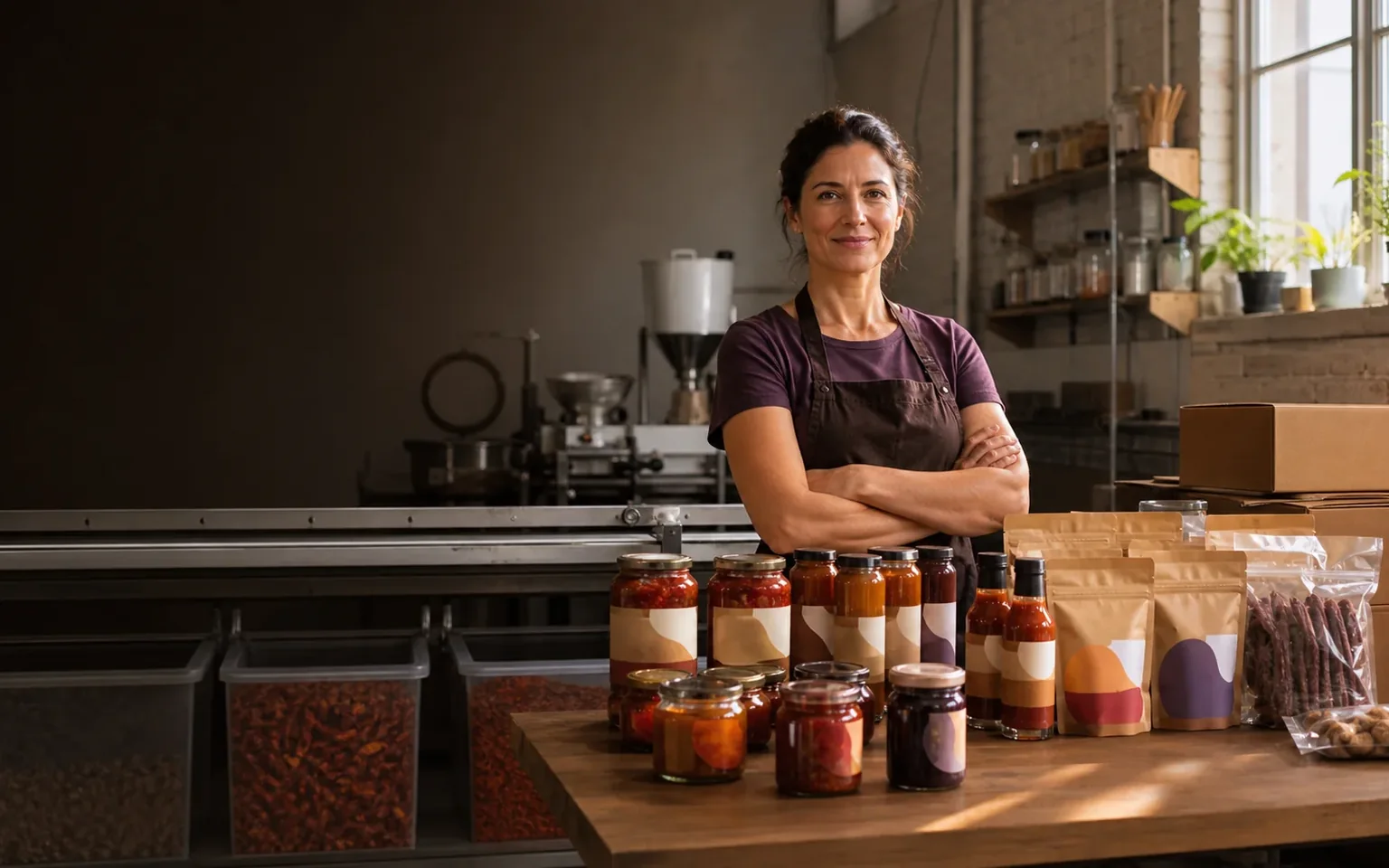
breakfast_diningBatch Scale for Jam and preserve businesses
Capture the season and keep every jar traceable.
For jam, jelly, marmalade, preserve, fruit butter, and spread makers coordinating seasonal fruit, formulas, cooking, fill yield, packaging, labels, markets, and wholesale.
A strong fit for
Jam, jelly, marmalade, preserve, and spread makers balancing seasonal ingredients, batch yield, markets, and wholesale.
A focused operating review—not a generic feature tour. No purchase required.
Turn variable fruit, cook loss, jar yield, seasonal supply, and committed demand into a production plan you can trust.
Fruit receipt to usable yield
Understand the true cost of prepared fruit.
Formula to kettle batch
Scale sugar, acid, pectin, and fruit from the approved version.
Cook result to jars
Convert actual yield into traceable packaged stock.
The cost of disconnected work
If these keep happening, growth is adding work instead of control.
The problem is rarely one bad spreadsheet. It is the gap between a product decision and every purchasing, production, inventory, customer, and margin decision that depends on it.
Fruit price, ripeness, sugar, and usable yield vary by crop and lot.
Cook loss and target set affect jar yield and unit cost.
Seasonal purchasing requires cash and freezer or cold-storage planning.
Markets and wholesale accounts need enough inventory without excessive aging.
The connected mechanism
Change the source record once. Let the workflow carry the decision.
For jam and preserve businesses, that means connecting these specific operating paths—not forcing the business into a generic inventory template.
See how the visual Workflow Canvas works arrow_forwardFruit receipt to usable yield
Understand the true cost of prepared fruit.
- Step 1
Receive fruit by grower, lot, grade, and purchase unit.
- Step 2
Record sorting, trimming, pitting, and prep loss.
- Step 3
Move usable fruit into available or frozen inventory.
Formula to kettle batch
Scale sugar, acid, pectin, and fruit from the approved version.
- Step 1
Choose target batch and package format.
- Step 2
Calculate ingredients and expected cook loss.
- Step 3
Issue production instructions and quality checkpoints.
Cook result to jars
Convert actual yield into traceable packaged stock.
- Step 1
Record Brix or other reviewed checks and actual finished weight.
- Step 2
Calculate and record jars, lids, labels, and cases.
- Step 3
Assign lot and best-by information to finished inventory.
Season to sales plan
Balance seasonal supply with realistic demand.
- Step 1
Forecast markets, gifts, online, and wholesale by flavor.
- Step 2
Compare inventory, shelf life, and planned production.
- Step 3
Reserve scarce fruit and packaging for the best use.
The answers you should not have to reconstruct
Know what is true before the next promise is made.
Fruit lots
Grower, crop, receipt, preparation loss, cost, and storage.
Preserve formulas
Versions, percentages, pectin, acid, scale, and instructions.
Cook records
Kettle, readings, loss, actual yield, checks, and release.
Jar traceability
Ingredients through finished lot, case, order, and customer.
Seasonal planning
Crop availability, forecasts, freezer stock, and production.
Market and wholesale
Event quantities, case packs, buyers, shelf life, and margin.
Already using spreadsheets or another system?
Keep the records that are working. Start with one painful handoff, validate the connected replacement, and expand only when the next workflow creates useful value.
Map a practical starting pointLower the time and effort to value
Start with the handoff already costing you attention.
You do not need to define the whole company before Batch Scale can be useful. Establish one source of truth, make one workflow dependable, then grow from real operating history.
- 01 · MapFollow one real order or batch
Find every decision, duplicate entry, wait, approval, and missing handoff.
- 02 · ConnectChoose the source records
Define which product, material, customer, and production facts drive the workflow.
- 03 · ProveRun it before expanding
Validate the result with current work, then connect the next valuable process.
Proof you can inspect
Try the method before trusting the promise.
These free Batch Scale tools are relevant to jam and preserve businesses. They run without an account and let you pressure-test a real decision with your own numbers.
Browse all free tools arrow_forwardA useful first step
Get your jam and preserve businesses workflow map.
Bring one preserve and one fruit season or production run. We will map usable yield, batch records, jars, inventory, and channel demand.
What you leave with
One fruit-lot-to-finished-jar workflow that makes seasonality, actual yield, traceability, and replenishment decisions visible.
- checkA visual map of one high-value workflow
- checkThe source records and decisions that should stay connected
- checkA realistic first implementation boundary
- checkNo generic deck and no purchase required
Questions from jam and preserve businesses
Common questions.
Is Batch Scale a fit for jam and preserve businesses?expand_more
Jam, jelly, marmalade, preserve, and spread makers balancing seasonal ingredients, batch yield, markets, and wholesale.
What happens in the workflow review?expand_more
One fruit-lot-to-finished-jar workflow that makes seasonality, actual yield, traceability, and replenishment decisions visible.
Do I have to replace every spreadsheet before I can start?expand_more
No. Start with one high-value workflow and the records it depends on. Validate that foundation, then connect the next process when it creates useful operational value.
Can I keep my current selling channels?expand_more
Yes. Batch Scale connects the operational records behind direct orders, local pickup, events, retail, e-commerce, subscriptions, and wholesale rather than forcing every business into one selling model.
Explore adjacent workflows