
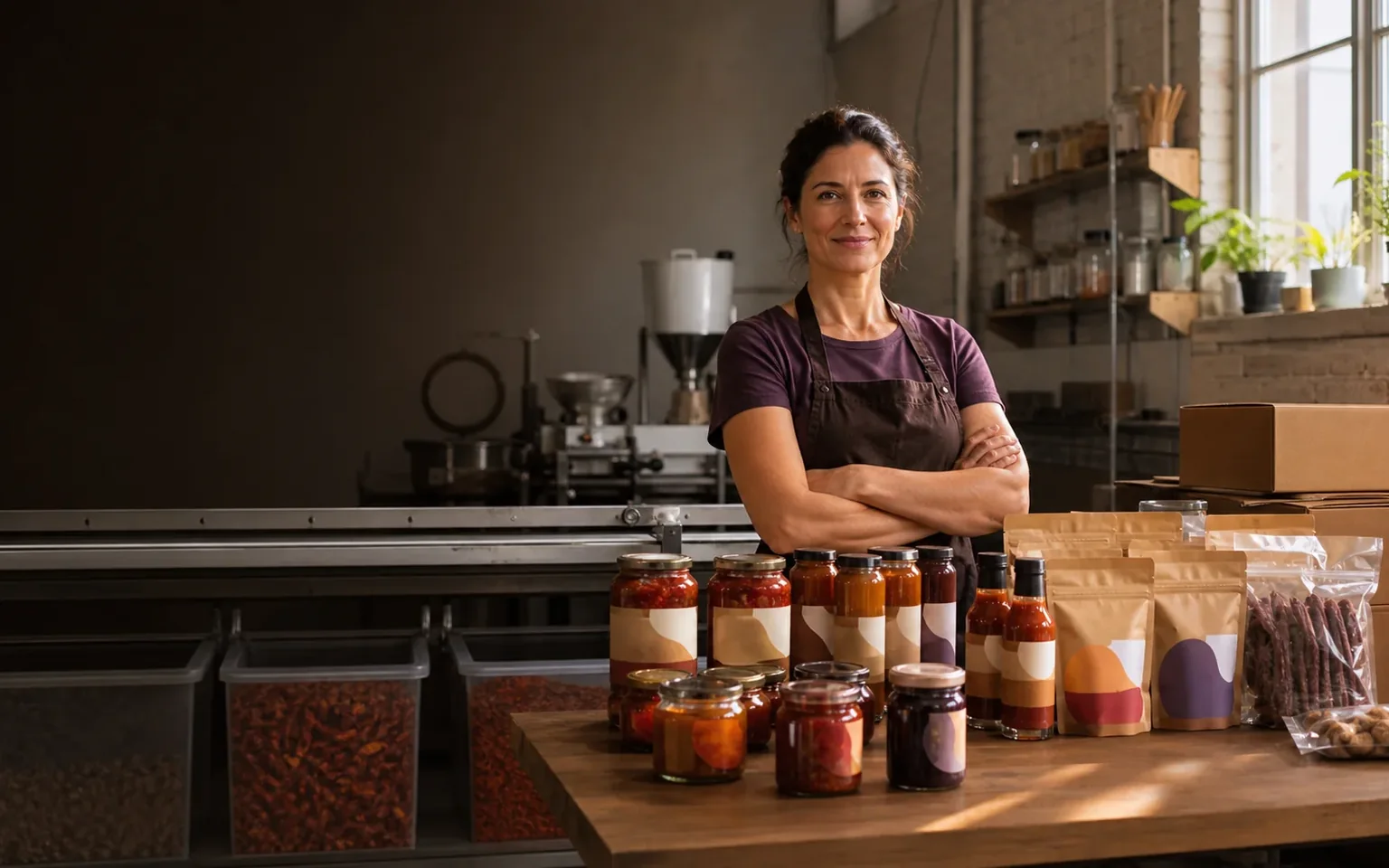
groceryBatch Scale for Specialty food producers
Build a food brand on records that can grow with it.
A connected operating system for packaged-food makers moving from local sales into retail, wholesale, co-packing, additional production space, or a wider catalog.
A strong fit for
Packaged-food founders outgrowing disconnected recipe, purchasing, label, production, inventory, and sales files.
A focused operating review—not a generic feature tour. No purchase required.
Build the operating record that carries a product from local demand into repeat production, retail, wholesale, and co-packing.
Product concept to approved specification
Give every SKU a controlled operational foundation.
Demand to material requirements
See shortages before production starts.
Production to traceable inventory
Preserve the evidence behind every released case.
The cost of disconnected work
If these keep happening, growth is adding work instead of control.
The problem is rarely one bad spreadsheet. It is the gap between a product decision and every purchasing, production, inventory, customer, and margin decision that depends on it.
Recipes, purchasing, labels, and production often live in separate files.
Growth exposes weak unit conversion, yield, and lot records.
Packaging MOQs tie up cash before finished product sells.
Retail requirements add case packs, lead times, barcodes, and buyer terms.
The connected mechanism
Change the source record once. Let the workflow carry the decision.
For specialty food producers, that means connecting these specific operating paths—not forcing the business into a generic inventory template.
See how the visual Workflow Canvas works arrow_forwardProduct concept to approved specification
Give every SKU a controlled operational foundation.
- Step 1
Define formula, yield, process, package, label, shelf life, and quality needs.
- Step 2
Review cost and target margin.
- Step 3
Release a version for production and selling.
Demand to material requirements
See shortages before production starts.
- Step 1
Combine forecasts, orders, safety stock, and available inventory.
- Step 2
Explode finished demand into ingredients and packaging.
- Step 3
Create purchasing and production actions by due date.
Production to traceable inventory
Preserve the evidence behind every released case.
- Step 1
Issue the correct formula and process version.
- Step 2
Record ingredient lots, actual quantities, checks, output, and loss.
- Step 3
Receive finished lots with shelf-life status.
Buyer order to cash
Connect commercial promises with execution and margin.
- Step 1
Apply buyer pricing, MOQ, terms, lead time, and freight rules.
- Step 2
Allocate stock or create production demand.
- Step 3
Ship, invoice, record payment, and review contribution.
The answers you should not have to reconstruct
Know what is true before the next promise is made.
Product specifications
Formula, process, yield, package, label, shelf life, and versions.
Purchasing and lots
Suppliers, approvals, orders, receipts, cost, and traceability.
Batch records
Instructions, actuals, checks, deviations, holds, and release.
Inventory planning
Availability, allocations, reorder points, expiration, and waste.
Wholesale operations
Catalogs, buyers, quotes, orders, terms, shipping, and invoices.
Product profitability
Materials, packaging, labor, overhead, fees, freight, and margin.
Already using spreadsheets or another system?
Keep the records that are working. Start with one painful handoff, validate the connected replacement, and expand only when the next workflow creates useful value.
Map a practical starting pointLower the time and effort to value
Start with the handoff already costing you attention.
You do not need to define the whole company before Batch Scale can be useful. Establish one source of truth, make one workflow dependable, then grow from real operating history.
- 01 · MapFollow one real order or batch
Find every decision, duplicate entry, wait, approval, and missing handoff.
- 02 · ConnectChoose the source records
Define which product, material, customer, and production facts drive the workflow.
- 03 · ProveRun it before expanding
Validate the result with current work, then connect the next valuable process.
Proof you can inspect
Try the method before trusting the promise.
These free Batch Scale tools are relevant to specialty food producers. They run without an account and let you pressure-test a real decision with your own numbers.
Browse all free tools arrow_forwardA useful first step
Get your specialty food producers workflow map.
Bring one priority product and the next channel you want to serve. We will map the smallest operating foundation that supports that move.
What you leave with
One product-to-channel workflow covering true cost, material demand, production evidence, case configuration, and profitable fulfillment.
- checkA visual map of one high-value workflow
- checkThe source records and decisions that should stay connected
- checkA realistic first implementation boundary
- checkNo generic deck and no purchase required
Questions from specialty food producers
Common questions.
Is Batch Scale a fit for specialty food producers?expand_more
Packaged-food founders outgrowing disconnected recipe, purchasing, label, production, inventory, and sales files.
What happens in the workflow review?expand_more
One product-to-channel workflow covering true cost, material demand, production evidence, case configuration, and profitable fulfillment.
Do I have to replace every spreadsheet before I can start?expand_more
No. Start with one high-value workflow and the records it depends on. Validate that foundation, then connect the next process when it creates useful operational value.
Can I keep my current selling channels?expand_more
Yes. Batch Scale connects the operational records behind direct orders, local pickup, events, retail, e-commerce, subscriptions, and wholesale rather than forcing every business into one selling model.
Explore adjacent workflows