
room_serviceBatch Scale for Meal prep and catering businesses
Turn booked meals into one calm prep and delivery plan.
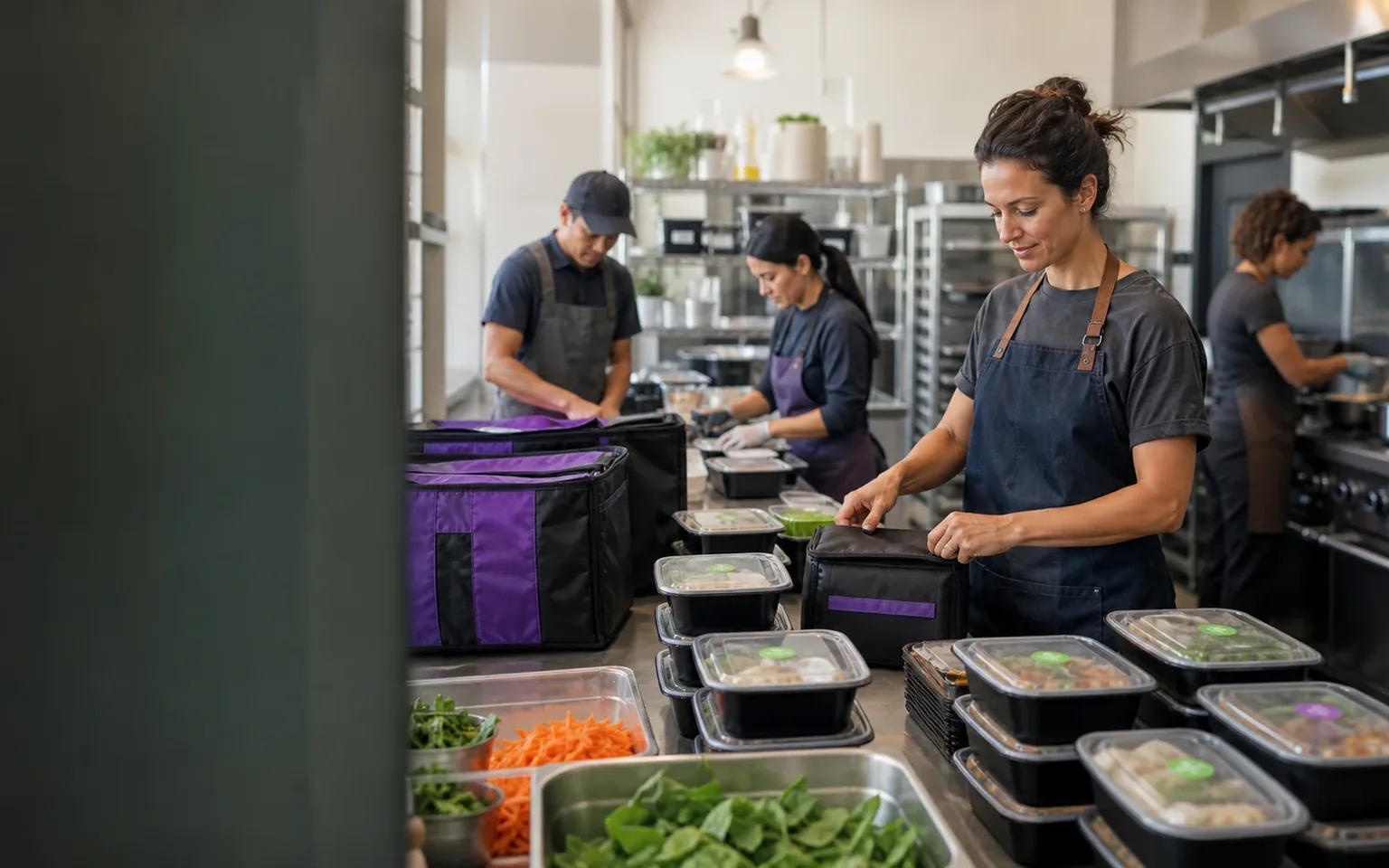
For meal-prep companies, private chefs, caterers, dessert tables, and prepared-food teams balancing menus, dietary needs, guest counts, purchasing, labor, packaging, and delivery.
A strong fit for
Meal-prep companies, caterers, private chefs, prepared-food teams, and event producers coordinating shared ingredients and fixed handoffs.
A focused operating review—not a generic feature tour. No purchase required.
Turn changing menus and guest counts into total purchasing, prep, packing, dietary checks, labor, and an on-time delivery plan.
Inquiry to event or menu quote
Scope the service before committing price and capacity.
Accepted demand to purchase plan
Aggregate every menu before ordering.
Prep plan to packed order
Give the kitchen a sequenced plan and clear identifiers.
The cost of disconnected work
If these keep happening, growth is adding work instead of control.
The problem is rarely one bad spreadsheet. It is the gap between a product decision and every purchasing, production, inventory, customer, and margin decision that depends on it.
Guest counts and menu selections change after the first quote.
Dietary details must follow the order into prep, packing, and handoff.
Shared ingredients hide total purchasing needs across events and subscriptions.
Delivery windows and holding requirements constrain production.
The connected mechanism
Change the source record once. Let the workflow carry the decision.
For meal prep and catering businesses, that means connecting these specific operating paths—not forcing the business into a generic inventory template.
See how the visual Workflow Canvas works arrow_forwardInquiry to event or menu quote
Scope the service before committing price and capacity.
- Step 1
Capture date, guests, menu, service level, venue, dietary needs, and delivery.
- Step 2
Calculate food, labor, equipment, packaging, travel, and overhead.
- Step 3
Issue options, deposit terms, and an expiration date.
Accepted demand to purchase plan
Aggregate every menu before ordering.
- Step 1
Lock current guest counts and recurring meal quantities.
- Step 2
Explode recipes into ingredient and packaging needs.
- Step 3
Subtract usable inventory and create supplier orders.
Prep plan to packed order
Give the kitchen a sequenced plan and clear identifiers.
- Step 1
Group prep, cook, chill, portion, label, and pack work.
- Step 2
Assign dietary and customer labels throughout the flow.
- Step 3
Complete counts and temperature or quality checks.
Dispatch to job margin
Keep delivery evidence and actual economics attached.
- Step 1
Build route, contact, window, and handoff instructions.
- Step 2
Record delivery or pickup completion and exceptions.
- Step 3
Compare actual food, labor, travel, and waste with quote.
The answers you should not have to reconstruct
Know what is true before the next promise is made.
Menu and recipe costing
Food, yield, labor, disposables, travel, rentals, and overhead.
Event and subscription demand
Guest counts, recurring meals, cutoffs, changes, and deposits.
Dietary details
Allergens, preferences, labels, substitutions, and handoff notes.
Kitchen production
Prep lists, stations, sequencing, portions, and packing checks.
Delivery planning
Routes, windows, contacts, instructions, and completion evidence.
Job profitability
Quoted versus actual food, labor, waste, delivery, and margin.
Already using spreadsheets or another system?
Keep the records that are working. Start with one painful handoff, validate the connected replacement, and expand only when the next workflow creates useful value.
Map a practical starting pointLower the time and effort to value
Start with the handoff already costing you attention.
You do not need to define the whole company before Batch Scale can be useful. Establish one source of truth, make one workflow dependable, then grow from real operating history.
- 01 · MapFollow one real order or batch
Find every decision, duplicate entry, wait, approval, and missing handoff.
- 02 · ConnectChoose the source records
Define which product, material, customer, and production facts drive the workflow.
- 03 · ProveRun it before expanding
Validate the result with current work, then connect the next valuable process.
Proof you can inspect
Try the method before trusting the promise.
These free Batch Scale tools are relevant to meal prep and catering businesses. They run without an account and let you pressure-test a real decision with your own numbers.
Browse all free tools arrow_forwardA useful first step
Get your meal prep and catering businesses workflow map.
Bring one recurring menu or booked event. We will map the path from quote and guest count through purchasing, prep, packing, and delivery.
What you leave with
One booking-to-handoff workflow with scope changes, dietary details, aggregate purchasing, work stages, and delivery controls.
- checkA visual map of one high-value workflow
- checkThe source records and decisions that should stay connected
- checkA realistic first implementation boundary
- checkNo generic deck and no purchase required
Questions from meal prep and catering businesses
Common questions.
Is Batch Scale a fit for meal prep and catering businesses?expand_more
Meal-prep companies, caterers, private chefs, prepared-food teams, and event producers coordinating shared ingredients and fixed handoffs.
What happens in the workflow review?expand_more
One booking-to-handoff workflow with scope changes, dietary details, aggregate purchasing, work stages, and delivery controls.
Do I have to replace every spreadsheet before I can start?expand_more
No. Start with one high-value workflow and the records it depends on. Validate that foundation, then connect the next process when it creates useful operational value.
Can I keep my current selling channels?expand_more
Yes. Batch Scale connects the operational records behind direct orders, local pickup, events, retail, e-commerce, subscriptions, and wholesale rather than forcing every business into one selling model.
Explore adjacent workflows